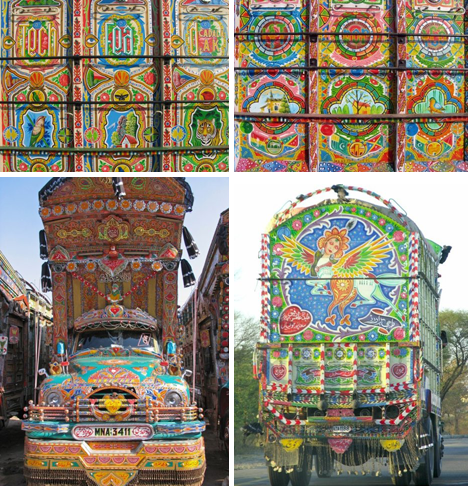
(Images via Abro on Flickr, Saudi Aramco World, and Pakistani Truck Art.)
The under-appreciated, indigenous Pakistani tradition of truck painting has an extraordinary history, starting in the days of the Raj. As early as the 1920’s, competing transportation companies would hire craftsmen to adorn their buses in the hopes that these moving canvases would attract more passengers. The technique worked so well that pretty soon you couldn’t purchase a ticket without seeing dozens of beautifully painted trucks waiting to take you to your destination. While the art doesn’t serve the same purpose anymore, it is still as prevalent as ever and has become more intricate and developed a deeper cultural significance over time.
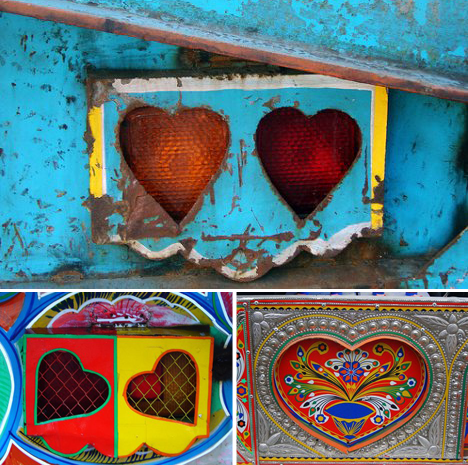
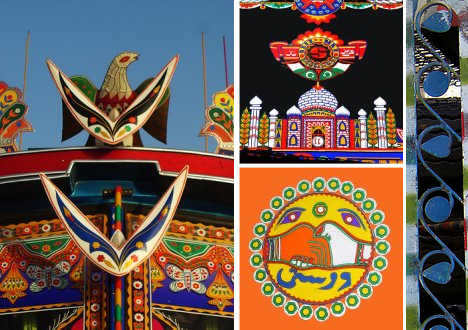
Even though truck art isn’t unique to Pakistan anymore, nowhere else in the world is the practice so pervasive. In a country where the per capita income is barely north of $2,000, it is surprising to see fleet owners (the trucks aren’t owner-operated) spend $3,000-$5,000 per truck for structural modifications that convert these gas-guzzling, smoke-spewing, road-dominating monstrosities into beautiful moving canvases covered in poetry, folk tales, and ‘…religious, sentimental and emotional worldviews of the individuals employed in the truck industry,’ making it one of the biggest forms of representational art in the country.
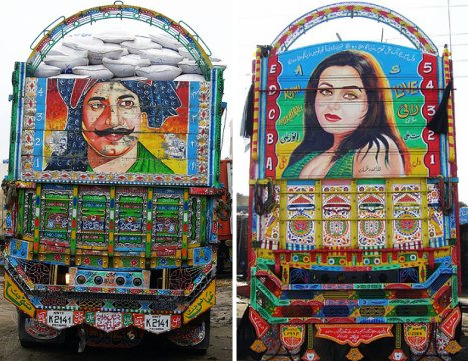
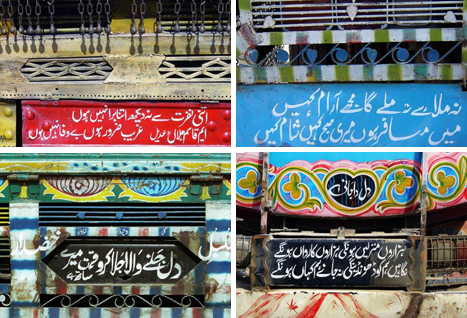
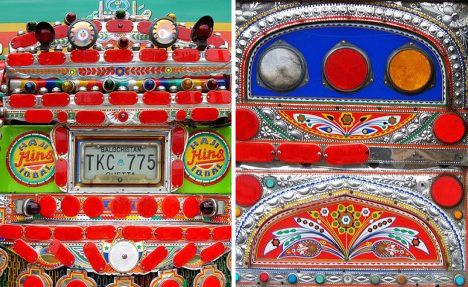
Unlike vanity plates and ‘pimp-my-ride’ style modifications, Pakistani truck art is about cultural history and tradition, storytelling, passion, and sometimes playful one-upsmanship. As such, every little adornment on the trucks has a special significance. Jamal Elias breaks down the motifs for truck art into the following 5 categories:
- Idealized elements of personal and communal life.
- Elements of political and national life.
- Talismans, trinkets, and clothing.
- Talismans or religious symbols.
- Obvious religious symbols and images.
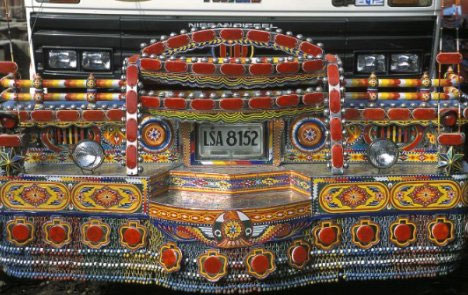
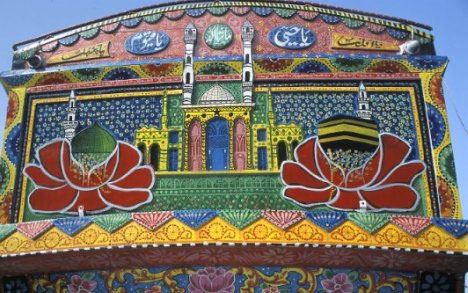
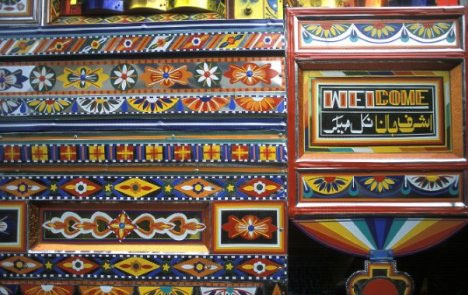
Partly due different ethnic heritage, partly due to the unique stories each tribe has to offer, even within Pakistan, each province has its own distinct style of truck painting. While Sindh is famous for camel bone work, Balochistan and Peshawari fleet owners prefer wood trimmings, and Rawalpindi and Islamabadi trucks favor plastic work. The materials, the color, the arrangement, and the overall art style ultimately serves as a cultural representative of the region.
