Mobile Urban Architecture: From Portable Housing to Temporary Hotel Rooms

Transportable Urban Dwelling

The world’s interest physical mobility has, to the surprise of many urban theorists, not decreased with the rise of global digital communication. In fact, people are more mobile than ever, changing jobs, cities, or even countries with increased frequency. This trend has played out in a variety of interesting ways when it comes to architecture and urbanism. More and more designers are developing nomadic alternatives to traditional models of static urban living.
Mobile Emergency Housing Unit

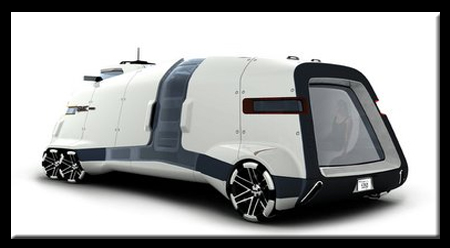
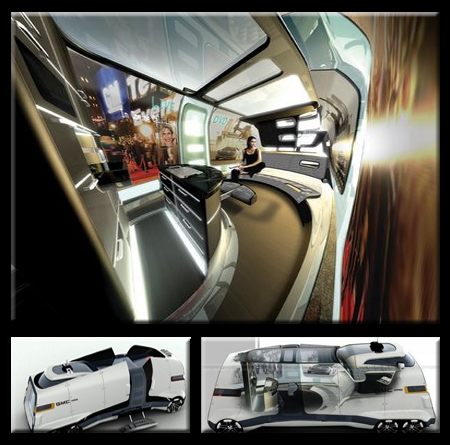
The GMC PAD was designed as an alternative to the financial problems of fixed living, particularly in areas with high land prices such as Southern California. Others have proposed it would be useful as an alternative FEMA-type emergency residence. Sustainability is, of course, of great concern in something that is in effect a souped-up kind of advanced mobile home. This portable living unit was therefore designed a diesel-electric hybrid. It also comes equipped with photovalic cells that charge onboard batteries, increasing the necessary time between refuels to weeks or even months.
Shipping Container Architecture

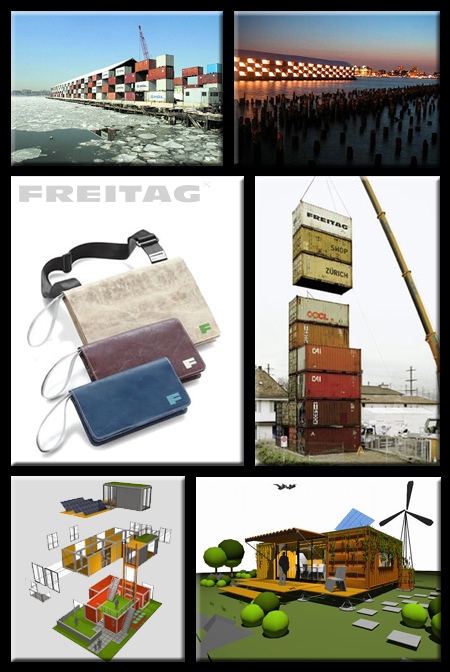
As the global number of available shipping containers grows, more and more designers are considering creative ways to adapt underused or discarded containers to architectural purposes. Such shipping container architecture has exists in a surprising variety of settings. Cargo containers have been used for institutional, commercial and residential projects including museums, stores and single- or multi-family housing. Their use as emergency medical units has also been advocated.
Portable Hotel Room

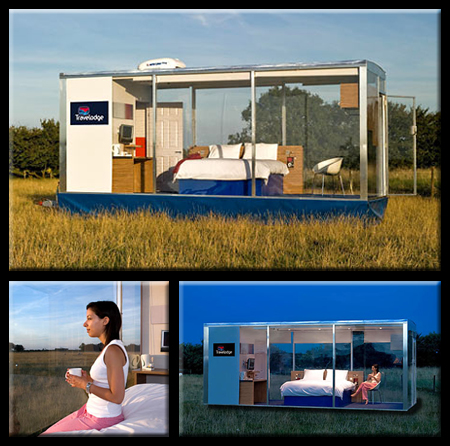
The world’s first mobile hotel room, though still in a test phase, is designed to be placed virtually anywhere. These portable rooms can be taken or delivered to remote or urban locations, from campgrounds and festivals to driveways and parking spaces. They contain virtually all of the standard amenities - from the basics, such as running water, to air conditioning and television, though, of course, no forseeable room service! The sustainability of these is, however, questionable. Are they the next wave of urban mobility or a sign of decadent times?


Want More? Check Out These Great Related Articles:

Comments

Comment from kim
Time: September 17, 2007, 9:17 pm

i stayed in http://www.treehouses.com - treehouses in a place that looks like degoba (sp?) out of star wars… but with full electricity.

Comment from CaptainPlanet
Time: September 18, 2007, 1:07 pm

It’s only sustainable as long as there is a readily available supply of diesel fuel (meaning its not sustainable at all). It is correct to call them fancy mobile homes, because that’s all they are. Anything using a non-renewable resource cannot be considered sustainable. Oil used as motor fuel has to have been the stupidest decision made by man in its entire history. That decision has caused enormous environmental damage, has bred a narcissistic society centered around the individual (as your blog indicates very aptly), as well as set us up for a future that has no chance of maintaining itself (not to mention the dangers of collapsing societal infrastructure).

Quote:
“It also comes equipped with photovalic cells that charge onboard batteries, increasing the necessary time between refuels to weeks or even months.”

That’s not quite what that article said. Read it again carefully:

Quote:
“A fully computerized resource management system allows the PAD to wring every last drop out of fuel and potable water supplies, with the projected time between refills lasting weeks or months. To supplement energy demands, six square meters of photovoltaic cells cover the top of the PAD, charging on-board batteries with energy collected from the sun. ”

I do believe by “refills” it was talking about water supplies. But even if that weren’t the case, the energy is coming mostly from the diesel fuel and the outside electric supply. The PV panels merely serve as a supplement. With a typical “150 watt” solar panel being about a square meter in size, 6 square meters at 900W is pretty decent, but you would have to have energy efficient appliances. If you look here: http://michaelbluejay.com/electricity/howmuch.html
you see what you have to work with.

The construction and manufacturing of such a vehicle, too, would require a large amount of resources that in the end would only serve one or two people (not to mention cost). The future for such a vehicle would be limited. The reasons are fairly obvious (cost, resources, space, supporting infrastructure, etc).

Putting all of that aside, I have to say it looks cool.

As for the shipping containers, I was reading somewhere that a group (I think in Minnesota or Montana, not sure which) was burying them and connecting them together to serve as bomb shelter complexes.

Comment from pop
Time: September 18, 2007, 6:12 pm

This is a reconfirmation of the human space. Last week, I observed some american indian cliff dwelling. The most comfortable, were approximately the size of a shipping container, as these designs are. Architects are starting to conceptualize the “shipping container” size as a globally transportable packet or capsule.

Comment from eugenef
Time: September 18, 2007, 6:27 pm

Those look amazing but are they cost effective…

Comment from Halil
Time: September 18, 2007, 8:45 pm

The mobile hotel room seems to be cool.

Comment from TapeMan
Time: September 18, 2007, 9:21 pm

The mobile hotel room should come equipped with one huge sign reading:

“You shouldn’t throw stones.”

Comment from Jenny
Time: September 19, 2007, 7:12 am

Cool stuff

Comment from haxality
Time: September 19, 2007, 8:21 am

CaptainPlanet, Diesel fuel may not be replenishable, but diesel engines can run on Biodiesel, which IS renewable. You should probably think about the facts before you type up a 5 page rant.

Comment from Web Urbanist
Time: September 19, 2007, 10:59 am

@Kim: Thanks for pointing those tree houses out - definitely looks like an interesting time!

@Pop: Agreed: shipping containers may be tight by American standards, but they seem a great step globally

@Captain: The article seems to be describing the energy, not the water, but you have a good point about the materials that go into construction. This post was not meant to come out in either full support or criticism, merely to raise awareness and ask questions. Glad it caused you to think about things and consider the downsides as well.

Comment from CaptainPlanet
Time: September 19, 2007, 12:35 pm

“CaptainPlanet, Diesel fuel may not be replenishable, but diesel engines can run on Biodiesel, which IS renewable. You should probably think about the facts before you type up a 5 page rant.”

Nowhere have I made the claim that biodiesel is nonrenewable. Your assertion that I have my facts wrong is misplaced since I never went into biodiesel. Biodiesel has downsides of its own.
First of all, you need to ask what is the EROEI of the product. If you’re using oil-based products (fertilizer, pesticides, farm equipment, etc) to produce the biodiesel fuel, you must compare the amount of end biodiesel product with your input of oil that could have just as easily been converted into diesel. Some make fabulous claims about varying plant types producing wondrous amounts of biodiesel with hardly any input at all. You must always remember that nothing is free. All that supposed energy came from somewhere. You don’t get huge amounts of product without depleting something somewhere (ie the soil or oil-product input; and the plants’ photosynthetic ability just isn’t that great whatever the optimists try to shove at you). You won’t see biodiesel ever replace oil in nearly the amount it is being used presently. Oil WILL be depleted. That depletion WILL affect our ability to produce enough to feed our population and our ability to produce food. Humans have squandered a resource that could have been used for food production and our ability to grow food would have lasted far into the future. Instead we burned it.

Today, our oil usage increases. It has increased exponentially and continues to do so. There is NO way that the world could keep up our food production (especially with an exponentially increasing population) and our energy production (with an exponentially increasing demand/usage) and still make the effort to transition from oil to biodiesel whose EROEI is questionable. Where will you get the land to grow it? Where will you get the necessary input TO grow it (or will you deplete the soil too)?

The best solution is to do without. The GMC PAD is an abomination. It should not be produced. It is a waste of energy and resources (and all for just one or two people per unit?!). It doesn’t matter that it can run on biodiesel (as explained above). The solution is through reduced usage and conservation (combustion vehicles are not). It will be forced upon us as time goes on as the physical world will not allow it. It’s better to start getting used to that now than to continue to live unquestioningly in the fantasy land of current civilization, that way you are more prepared to deal with the inevitable (it’s also healthier for you – and the planet). “Always be prepared.�

And remember… The Power Is Yours!

Comment from Web Urbanist
Time: September 30, 2007, 12:44 am

Like Chico living in his old van in the TV show “Chico and the Man”

Comment from David Curtis
Time: December 28, 2007, 3:31 pm

Regarding whether the use of shipping containers in construction is a sign of decadent times or the question of sustainability, I think we need to perceive them currently as a rich supply of “raw material units”. We either use them or they turn to waste. I’m seeing more and more of them being put to use as storage space by businesses such as my local Cracker Barrel in Hernando County Florida. Last year they got one 40 footer and put it to use in an unused parking spot near the kitchen for extra supplies. This year they have three shipping containers - two 40 footers and one 20 footer. Warlic Hall Engineering famous for building race tracks, glass structures and stadiums has branched out to form Container Creations at http://www.container-creations.com and is now making sports arena concession stands, school press boxes, hunting, fishing and camping quarters and other useful things out of these shipping containers. I particularly like that they’re being used as hunting cabins because I’ll bet that they’re bullet proof enough to prevent a stray bullet from a hunter from crashing through and killing someone inside. They are being used by the military as “Combatant Temporary Containment (ventilated)” which to me pretty much says “bullet proof”. True they may eventually run out (sustainability) but that would mean that either we’re shipping more goods worldwide than we are receiving (good), or we as a nation are no longer able to ship or receive goods - and by that time, if you haven’t already got any shipping containers to live in - it will mean we’re all living in cardboard boxes anyway, and the people with the containers are going to be happy they’ve got them and even happier that they’re more or less indestructible.

Comment from frank
Time: January 21, 2008, 9:14 pm

That is pure genuis i love it !!

Comment from CalArch
Time: February 13, 2008, 4:04 am

Love the blog, if i may ask, what software are you using? how much does it cost? where do you get it? If it’s not a secret email me some details wouldya?

thanks in advance!

Trackbacks

  1. Mobile Urban Architecture at BED Online Magazine - The Bed Blog - We are crazy about beds.
  2. » 3 Kinds of Amazing Portable Architecture [PICS] eDollop:
  3. Nerdcore — Links vom 19. 9. 07: Sex Pistols, The End, mobiles Hausen, der Urknall und das Wii-Lichtschwert
  4. ThemePassion - Best stuff about design! » Mobile Urban Architecture: From Portable Housing to Temporary …
  5. Portable Architecture | Urban Planning Blog
  6. links for 2007-09-21 | Daily EM
  7. 3 Kinds of Amazing Portable Architecture [PICS] « Design News
  8. WebUrbanist » 5 Kinds of Creative Recycled Architecture: Cans, Bottles and Other Unusual Building Materials
  9. Technology Design Stories » 3 Kinds of Amazing Portable Architecture [PICS]
  10. Articler Blog » Blog Archive » 3 Kinds of Amazing Portable Architecture [PICS]
  11. WebUrbanist » 7 of the Smallest Hotels and Hotel Rooms in the World: From Pipe Rooms to Capsule Hotels
  12. WebUrbanist » 3 (More!) Awesome Approaches to Portable Living: From ‘Garbage Trucks’ to Portable ‘Living Rooms’

Write a comment


Get WebUrbanist via Email