(Check out our complete collection of Underwater and Oceanic Oddities.)
Who hasn’t imagined living on their very own floating paradise? For those aboard ResidenSea, a permanent ocean-going residence, this dream is at least a partial reality. Freedom Ship (upon its completion) will take floating cities to a new level and if the Living Universe Foundation has its way the oceans will just be a first stop on the humanity’s path to the stars. From seafaring condos to oceanic micronations, this collection is roughly sequenced from most practical (but also most mundane) to most extraordinary (but also least plausible)!
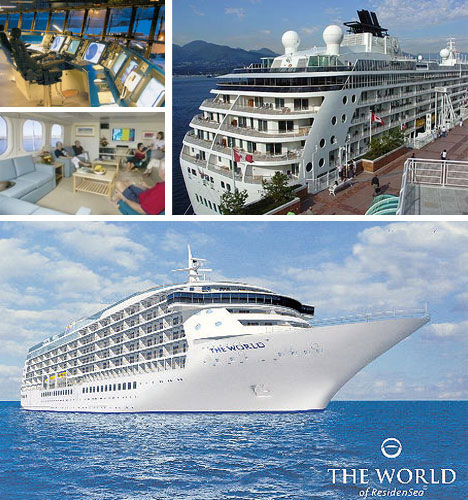
ResidenSea is a (perhaps unsurprisingly) Florida-based company that manages the world’s only mobile and full-time floating luxury community called The World. Think of this as a cruise ship – but on serious steroids. While this project doesn’t claim micronational status it is essentially completely independent of any location. Prices are predictably high, ranging from 2.5 to 7.5 million dollars to own on-board condo spaces. Activities and amenities on board include swimming pools, restaurants, tennis courts, a library, health spa, fitness center and even golf greens. Sure, it sounds a lot like a cruise ship, but it is also a full-time residence (and even tax haven) for many on-board owners. Still, if it isn’t exciting enough, the Freedom Ship (next paragraph) sure should be.
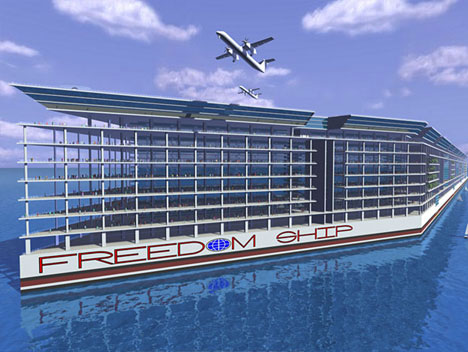
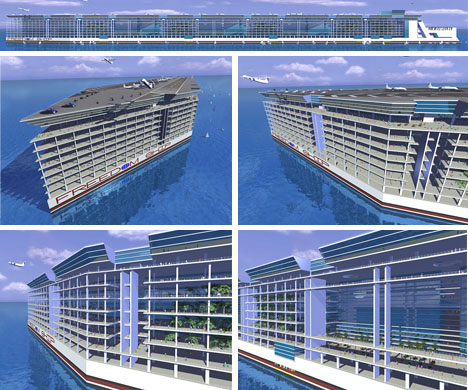
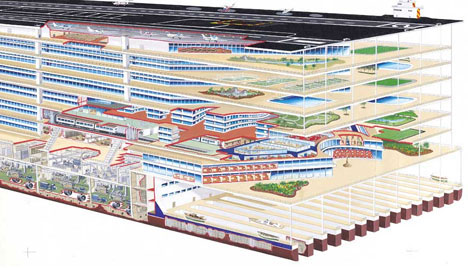
The Freedom Ship project is a serious step up from ResidenSea but also unbuilt as of yet, though 1/5 of the on-board living units have already been sold. The concept? A mile-long, energy self-sufficient floating city with absolutely everything included from parks and playgrounds to apartments, businesses, schools, casinos and shopping malls. It will also be fully networked for phone and internet communications. Rather than docking, aircraft will land to resupply the ship and deposit and pick up residents. At 25 stories high the ship would accommodate 40,000 full-time residents and 60,000 total occupants. More than a floating paradise this is designed to be a fully functioning and essentially autonomous city of relatively uniform architecture. Though funding is still needed, signs still point to the eventual completion of this ocean-going wonderland.
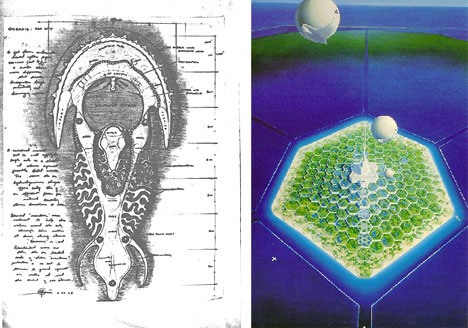
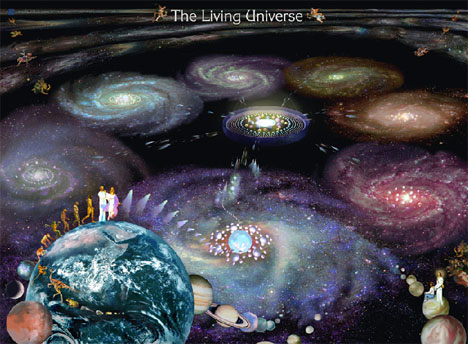
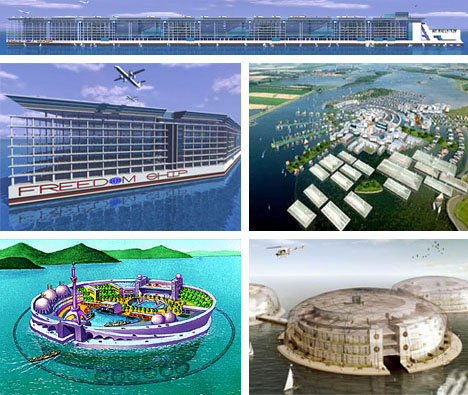
The Living Universe Foundation is a strange organization dedicated to the long-term colonization of the galaxy. In the long term, they envision humans tapping into the vast natural resources outside of planet Earth – from the sun’s energy (of which we get only a tiny fraction of course) to vast mineral deposits on nearby asteroids. In the short term, however, they believe that a series of self-sufficient, semi-autonomous ocean-going cities are the first step on this eight-step journey to galactic conquest. What are to start as sea-faring colonies would form the basis for future space journeys as these semi-independent enclaves could then be transported to the stars as units. Power would be generated by taking advantage of the temperature differentials at the water’s surface versus the deeps. The sea-borne populations would subsist on sea life and tourist trade and the urban design (shown above) would be based in part on managing water navigational issues. The first step in this project? Apparently, the foundation has started with a land-based colony in Texas with one resident in a trailer.
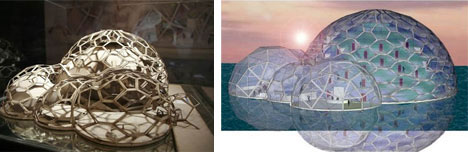
The Celestopia Project is a broad-scoped attempt at colonizing the Earth’s oceans one settlement at a time. According to one source, Celestopean Elemental Separators will (apparently) allow them to mine the ocean’s waters for not only “hydrogen and oxygen” but also for “platinum and gold.” Their more moderate homepage suggests they will use Thermal Energy Converters (OTECs) to harvest power from temperature differentials in the ocean. Life on these oceanic colonies will involve age-extending health practices and domed residences that will be resistant to the forces of nature. Each such floating city will be designed to house 5,000 to 10,000 people and these will slowly cover the surfaces of all of the Earth’s oceans.
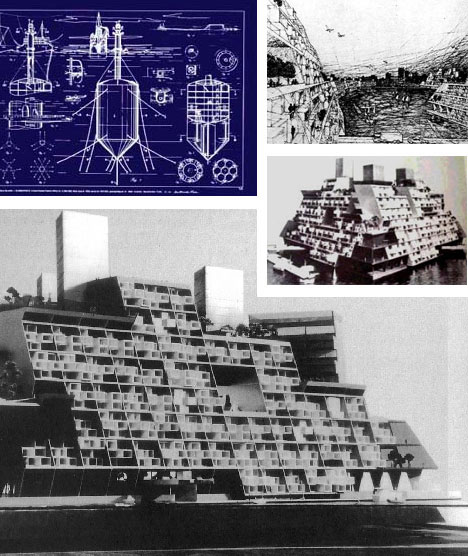
So where did this all start? As with many present utopian ideals and building strategies a surprising number of philosophical ideas, building strategies and ecological approaches embodied in the aforementioned floating utopian concepts date back to the famous environmentalist, scientist, designer, philosopher and visionary Buckminster Fuller. In the 1960s he developed a design for something known as Triton City
