
Green architecture comes in many forms though lately it seems like these forms are stranger than ever. Urban skyscraper farms? Floating eco-cities? Glowing solar towers? Turbine-driven skyscrapers? Magnetically levitated wind collectors? Where does it end?! With all of these emerging green technologies it seemed an appropriate time to take a look at seven of the most amazing real and conceptual designs currently at the forefront of ecological innovation. These examples push the limits of ecological architecture and contemporary urban design discourse. [This article created with generous assistance from Agustin Otegui as part of our series on Green Art, Design and Technology).
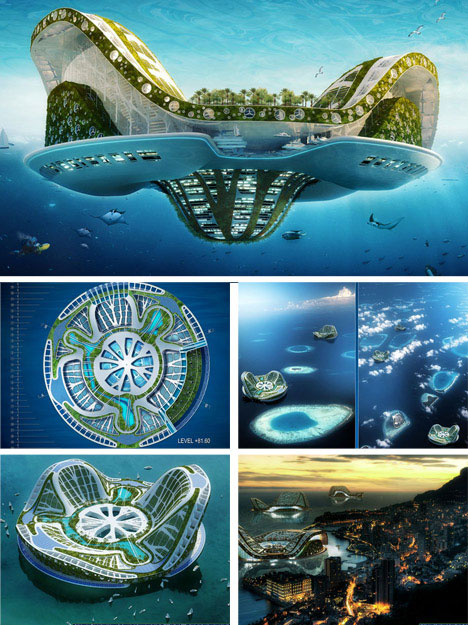
The so-called Lilypad Project is perhaps the most fantastical of these green wonders and certainly the farthest from being built but is too amazing a concept not to mention. The idea is to create a series of floating self-sufficient ocean-going eco-city islands. Each one would be able to house 50,000 residents and would support a great deal of biodiversity. Collecting pools located in their centers would gather and filter water for use on board. These would be places for adventurers and refugees alike as water levels rise around the world and threaten many, particularly island, habitats.
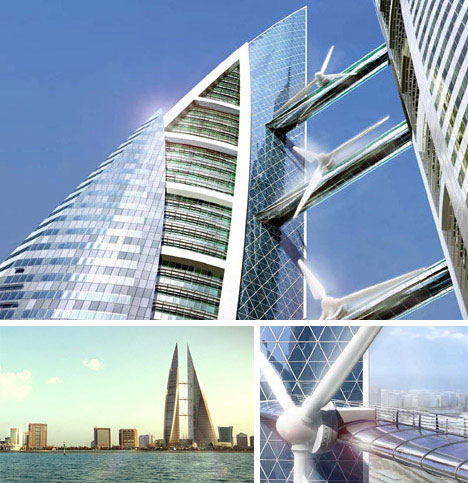
The most impressive feature of the new Bahrain World Trade Center is, no doubt, the three massive wind turbines situated between the two towers comprising the main building. Each of these 80-foot turbines projects from a bridge between towers. The shape of the towers themselves channels and accelerates air moving between them which will help the building generate even more power. It is by far the largest wind-powered design incorporated into a massive building project to date.
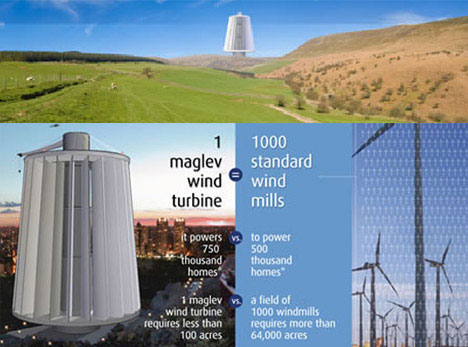
The MagLev Wind Turbine is a big step forward in the world of wind power. By using magnetism to levitate the blades friction is eliminated and more power can be produced without any additional power expense (since the magnetics require no energy to run). The MagLev has a low threshold velocity for producing energy, could theoretically survive for centuries and can power up to 750,000 homes. Though the initial investment involved hundreds of millions of dollars the payoff is potentially huge.
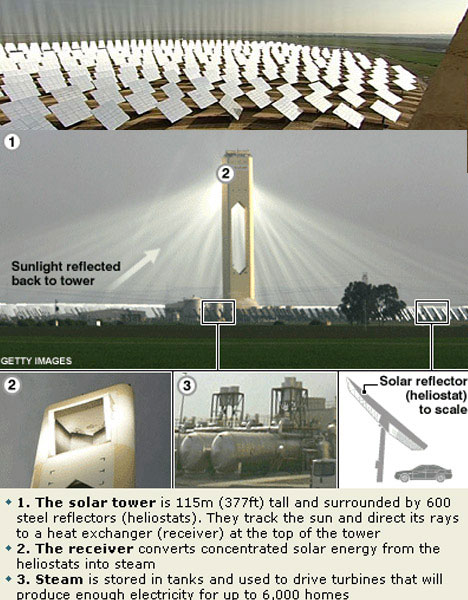
This glowing solar tower looks like something straight out of the Bible. Glowing bright white it sticks out like a sore (giant’s) thumb in the middle of the rolling countryside in Spain. So what is it? Well, it is Europe’s first commercial power station to harness the energy of the sun. How does it work? The sun’s rays are all directed at a single point of the tower and turn water at that point into steam. The steam in turn moves through turbines and generates energy. A strange but very functional process.
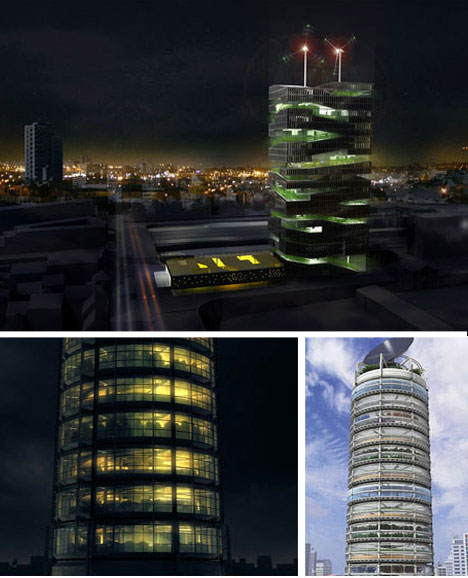
Urban skyscraper farms are still purely conceptual for now but are amazing theoretical propositions. They would provide locally grown food in densely packed urban centers. Some such designs incorporate elaborate rainwater reuse systems and other sustainable strategies intended to minimize their environmental impact and maximize their productivity. However, they are massive in scale and would cost a great deal to build. This huge initial outlay is part of what is keeping them out of production.
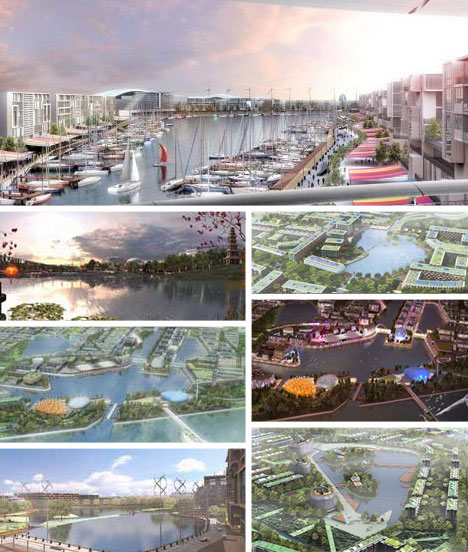
The Dongtan Eco-City is designed to be the world’s first not only an environmentally but also a “socially, economically and culturally” sustainable city. The site is over 50 square miles in size and will be split between agricultural and urban areas. The city relies on its own wind and solar energy as well as organic farming strategies. Public transportation will be entirely emissions free. In many ways this is a prototype for large-scale city planning within a fully eco-friendly mindset.
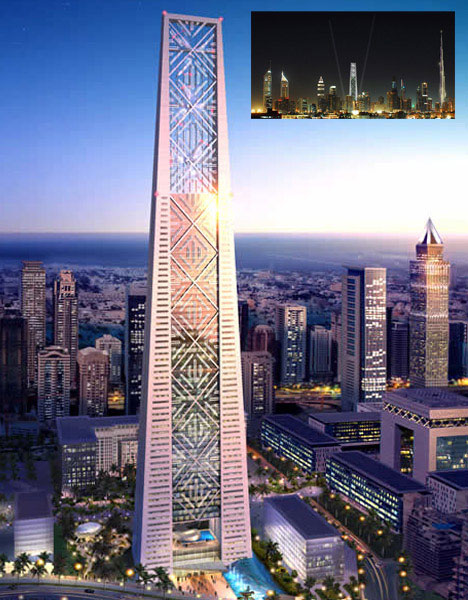
The so-called Lighthouse skyscraper is a 1000-foot-tall office skyscraper that is designed to use about half the water and energy of a typical high-rise building. The tower design employs solar energy collection and wind farming techniques coupled with strategies to reduce the use of and improve recovery of energy and water within the building. If/when built, this building will be a kind of working prototype for future green design in massive urban construction.
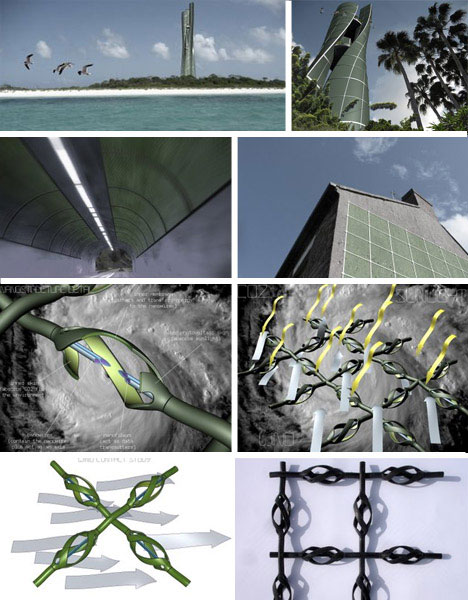
While these projects are extremely impressive in terms of their scope, scale and innovation many of them are expensive and difficult to replicate. They are, in short, large-scale solutions to a pervasive problem that exists on all scales with respect to sustainability in design. So what is the answer? Well, some designers have come up with alternatives that are meant to work at varying scales and within more limited budgets. Agustin Otegui’s Nano Vent-Skin is a perfect example.
What is it? In short it is a structure that acts like a skin. It is composed of mini wind turbines made out of micro organisms which generate energy from wind and sunlight. NVS was born as a small scale alternative after seeing all the gigantic projects (like those mentioned above) being built around the world. Where it seems that in order to be green you have to think big and build something impressively huge. This concept tries to make Architects and Designers think on a smaller scale and apply it to existing buildings, houses and structures or even tunnels and barriers to generate energy.
Next: 15 More Green Wonders
More Underground, Underwater and Other Wonders of the World
7 Underground Wonders of the World
7 (More!) Underground Wonders of the World
7 Underwater Wonders of the World
7 Island Wonders of the World
7 Engineering Wonders of the World
7 Urban Wonders of the World
7 Wonders of Modern Green Design and Technology
Amazing Abandoned Cities, Places and Property of the World
7 Abandoned Wonders of the World
7 (More!) Abandoned Wonders of the World
7 Abandoned Wonders of America
7 (More!) Abandoned Wonders of America
7 (Even More!) Abandoned Wonders of America
7 Abandoned Wonders of the Former Soviet Union
7 (More!) Abandoned Wonders of the Former Soviet Union
7 Abandoned Wonders of the European Union
